
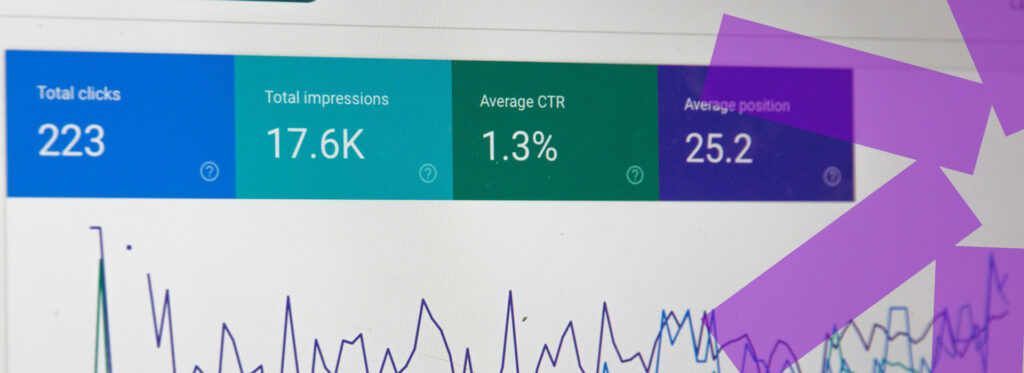
Marketing Metrics in France: Measuring Performance and Impact
Marketing metrics are widely used in France, but they are rarely treated as isolated numbers or short-term scorecards. Instead, les indicateurs marketing are interpreted as tools for understanding performance over time, supporting decision-making, and maintaining credibility with internal stakeholders. French marketing culture tends to favour measured analysis (l’analyse mesurée) over rapid reaction.
Terms such as l’audience, le taux de conversion, or le retour sur investissement are firmly embedded in professional language, yet the way they are discussed reflects broader cultural preferences for structure, justification, and strategic coherence.
Metrics as Indicators, Not Absolutes
In French marketing discourse, metrics are often referred to as des indicateurs rather than final results. This framing matters. An indicateur is something that guides interpretation, not something that automatically dictates action.
Performance data is expected to:
- éclairer une décision
- confirmer une tendance
- justifier une orientation stratégique
Short-term fluctuations are rarely over-interpreted. Instead, metrics are analysed within a broader context of objectives (les objectifs), campaigns (les campagnes), and brand positioning.
Audience, Reach, and Visibility
L’audience is a foundational concept in French marketing metrics, particularly in content and media-focused strategies. Audience is often discussed alongside:
- la portée (reach)
- la visibilité
- l’exposition
These indicators help assess whether content or campaigns are reaching the intended public (la cible). However, raw audience numbers are rarely sufficient on their own. Visibility must be relevant and aligned with strategic goals.
Engagement and Interaction Quality
Beyond audience size, French marketers place strong emphasis on engagement quality. Indicators such as:
- le taux d’engagement
- les interactions
- le temps passé
are used to evaluate whether content resonates meaningfully. High engagement is often interpreted as a signal of relevance (la pertinence) and credibility rather than immediate commercial intent.
Superficial interaction metrics are treated cautiously, particularly if they are not aligned with the broader objectives of the campaign.
Conversion and Progression Through the Funnel
Le taux de conversion is a key metric, but it is rarely analysed in isolation. Conversion is typically discussed in relation to:
- the stage of the funnel (l’entonnoir)
- the type of content
- the maturity of the prospect
French marketing teams often track how users move from l’audience to le prospect, rather than focusing solely on final outcomes. This reinforces the idea of marketing as a progressive journey rather than a binary success/failure model.
Return on Investment and Accountability
Le retour sur investissement (ROI) is an important metric, especially when marketing teams need to justify budgets. However, ROI discussions in France often extend beyond immediate revenue.
They may include:
- contribution to brand image (l’image de marque)
- long-term lead quality
- support for commercial teams
This broader interpretation reflects the expectation that marketing creates value over time, not just instant returns.
Campaign Performance and Comparison
Campaigns (les campagnes) are commonly evaluated through comparative analysis. Metrics are used to:
- compare campaigns over time
- identify trends
- refine future approaches
Rather than declaring a campaign a success or failure immediately, performance is often reviewed retrospectively (a posteriori) to extract lessons and improve future planning.
Dashboards, Reporting, and Internal Communication
Marketing metrics play an important role in internal communication. Dashboards (des tableaux de bord) and reports (des rapports) are designed to:
- synthesise data
- present results clearly
- support discussion with management
Clarity and structure are essential. Metrics are expected to tell a coherent story, not overwhelm with volume. Well-presented data strengthens the credibility of the marketing function internally.
Why Metrics Are Interpreted Cautiously in France
French marketing culture often prioritises analysis before action. Rapid optimisation based on short-term metrics can be viewed as risky, particularly if it undermines brand coherence or strategic consistency.
This cautious approach reflects:
- sensitivity to reputational risk
- preference for stability
- emphasis on long-term positioning
Metrics are tools for guidance, not automatic triggers.
Understanding French Marketing Metrics in Practice
Marketing metrics in France are best understood as decision-support tools rather than performance verdicts. Audience, engagement, conversion, and ROI all matter, but they are interpreted within a structured, strategic framework.
Recognising how les indicateurs marketing are discussed and used makes it easier to understand reporting practices, evaluate performance, and collaborate effectively with French-speaking marketing teams.